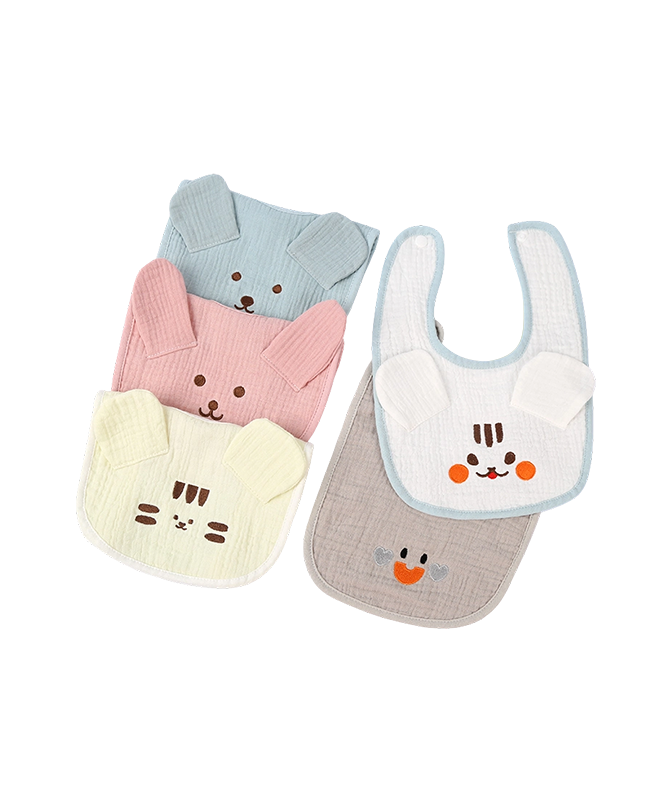
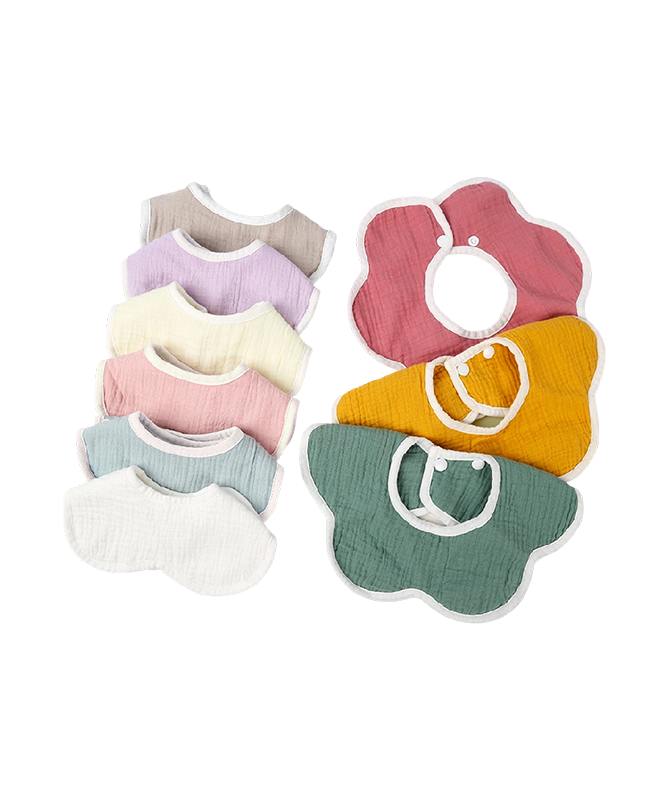
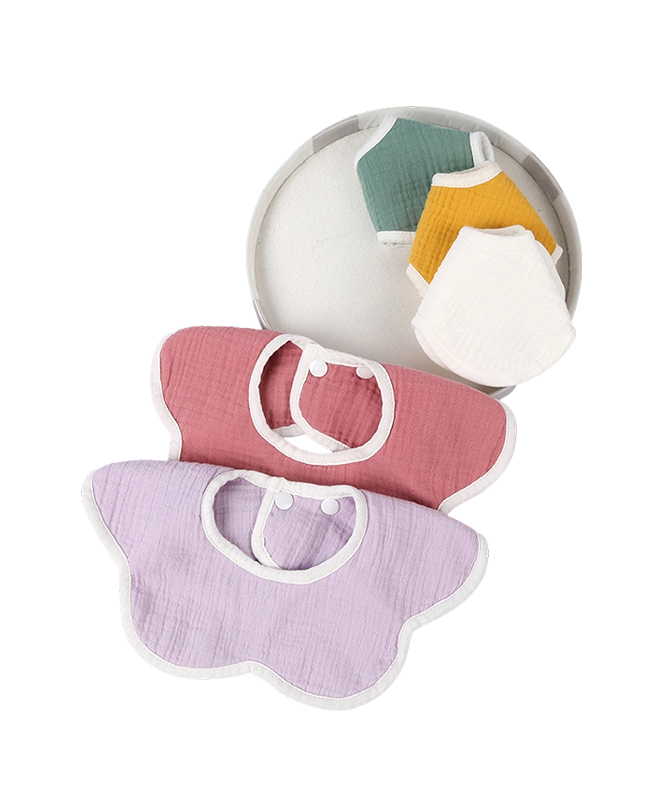
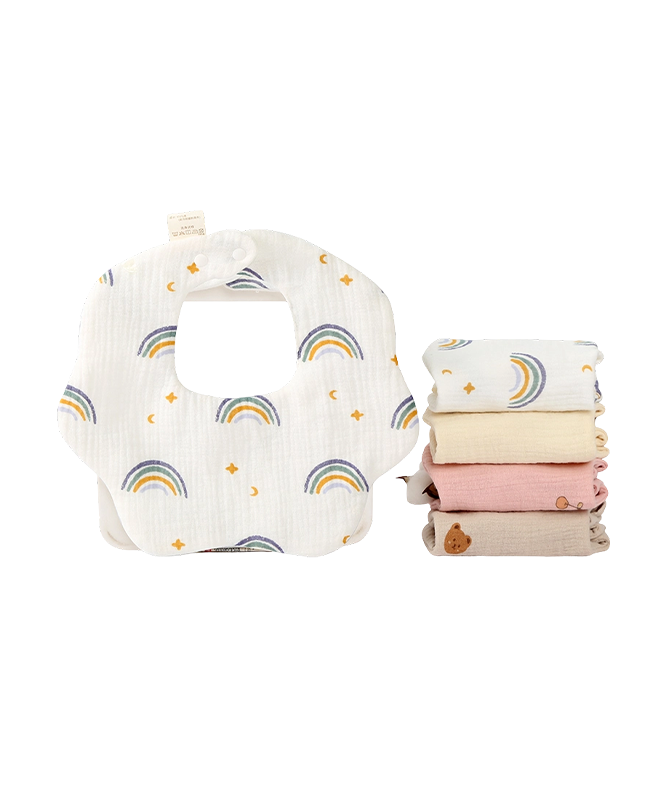
Why Are Baby Bibs Necessary Daily Use?
Baby bibs are designed to protect infant clothing and skin from moisture, food, and saliva. Their function extends beyond cleanliness and plays a role in maintaining skin health and reducing laundry frequency.
Moisture Management and Skin Protection
Infants produce a significant amount of saliva, especially between 3 and 12 months when salivary glands become more active and teething begins. Without a bib, saliva can remain in contact with clothing and skin, which may contribute to:
- Skin irritation caused by prolonged dampness
- Increased risk of mild rashes around the neck and chest
- Frequent clothing changes, increasing caregiver workload
Bib fabrics absorb or block moisture, preventing prolonged exposure. Some designs include multilayer construction, combining an absorbent outer layer and a moisture-resistant backing.
Feeding Support and Hygiene Control
During feeding, babies often lack full motor control, which causes spills. Bibs help contain food debris and liquids, reducing contamination of clothing. This is especially useful when introducing semi-solid foods around 6 months.
Functional design features may include:
- Wide coverage area to protect chest and upper torso
- Curved neckline to reduce leakage gaps
- Secure closures such as snaps, Velcro, or adjustable fasteners
These features allow bibs to remain in position during movement.
Age-Based Functional Differences
Different developmental stages require different bib characteristics:
- Newborn stage: Lightweight bibs focus on drool absorption
- Teething stage: High absorbency becomes more important
- Feeding stage: Larger coverage and easy cleaning become priorities
Understanding this progression helps caregivers select bibs suited to the infant’s changing needs.
What Makes Muslin Cotton Bibs Unique Material Choice?
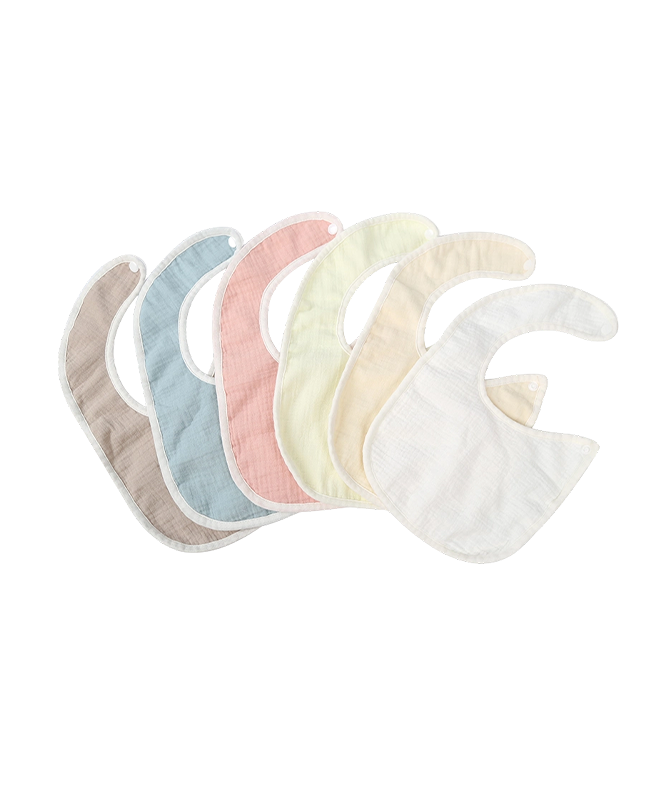
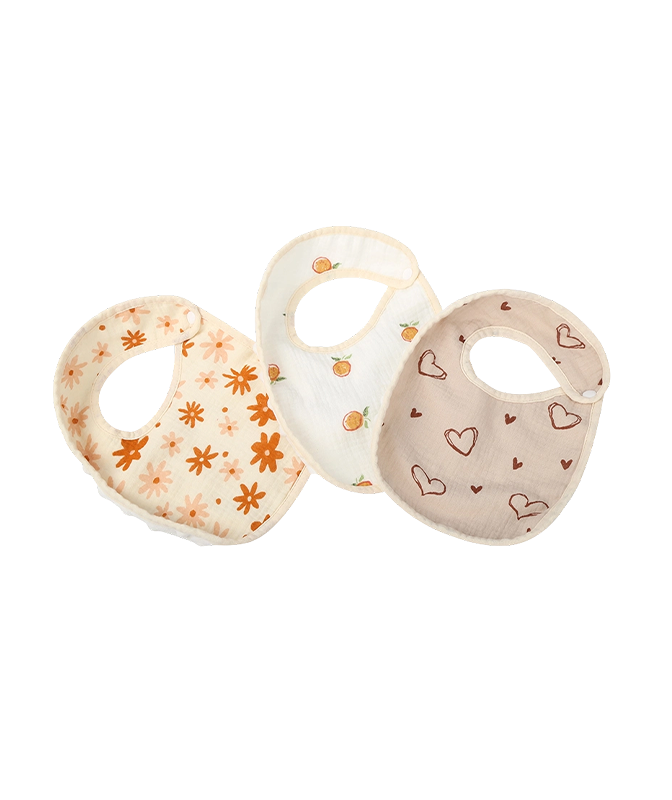
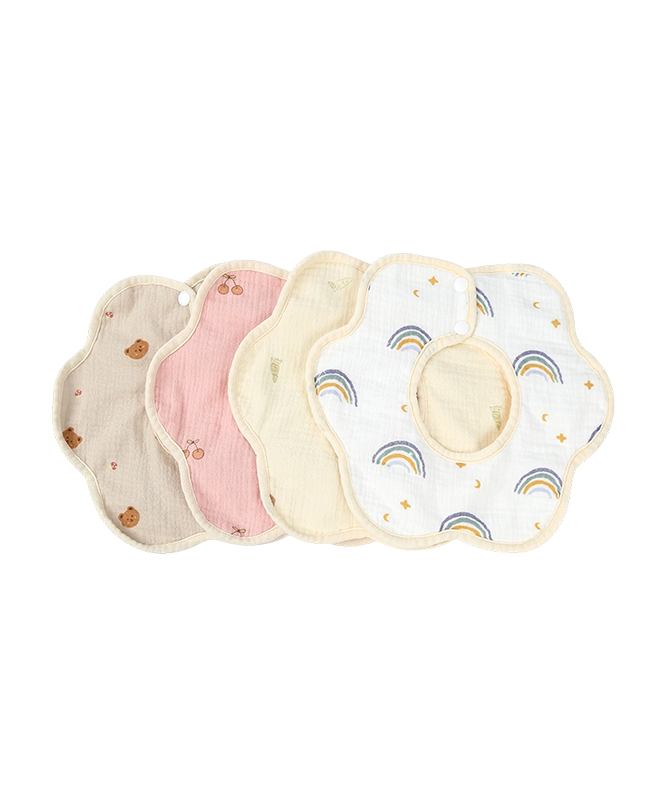
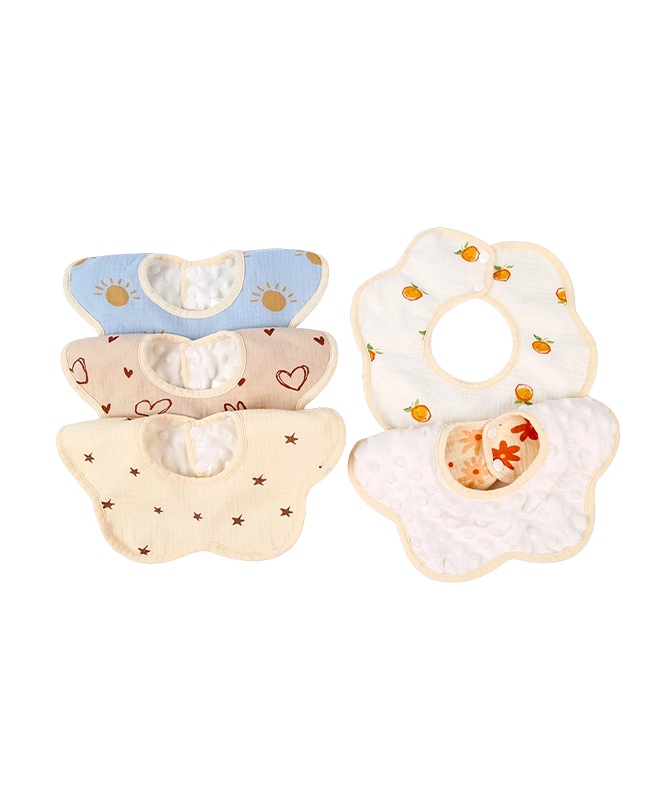
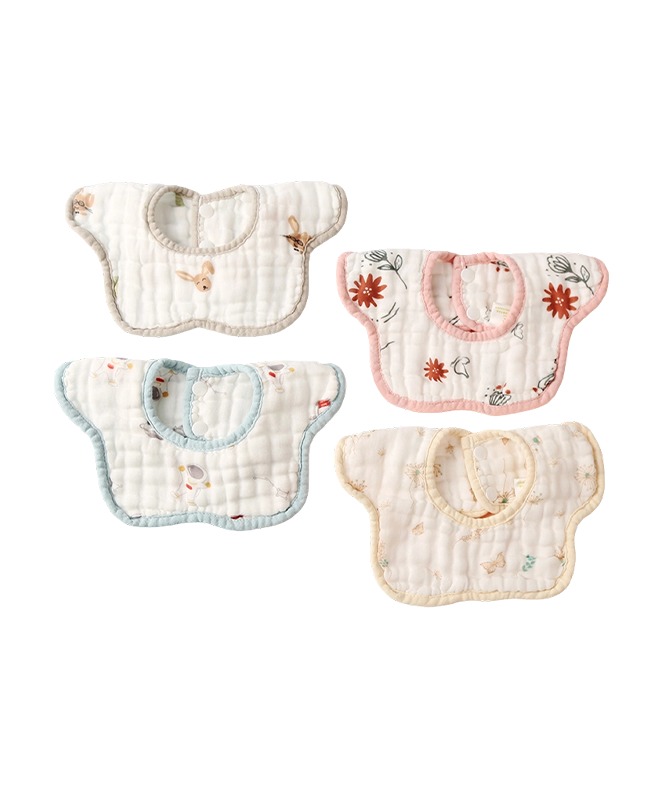
Muslin cotton bibs are defined primarily by their fabric composition and weaving structure. Muslin is a loosely woven cotton textile known for breathability and softness.
Fabric Structure and Breathability
Muslin cotton uses a plain weave with lower thread density compared to tightly woven cotton fabrics. This structure allows:
- Air circulation, helping reduce heat buildup
- Faster evaporation of moisture
- Lower likelihood of overheating during extended wear
This makes muslin cotton bibs suitable for warm climates or prolonged use throughout the day.
Absorption Characteristics and Performance
Muslin cotton fibers naturally absorb liquid due to their cellulose structure. Compared with synthetic materials, cotton fibers can retain moisture while maintaining surface softness.
Practical advantages include:
- Quick absorption of drool and minor spills
- Reduced moisture transfer to underlying clothing
- Comfortable surface contact with infant skin
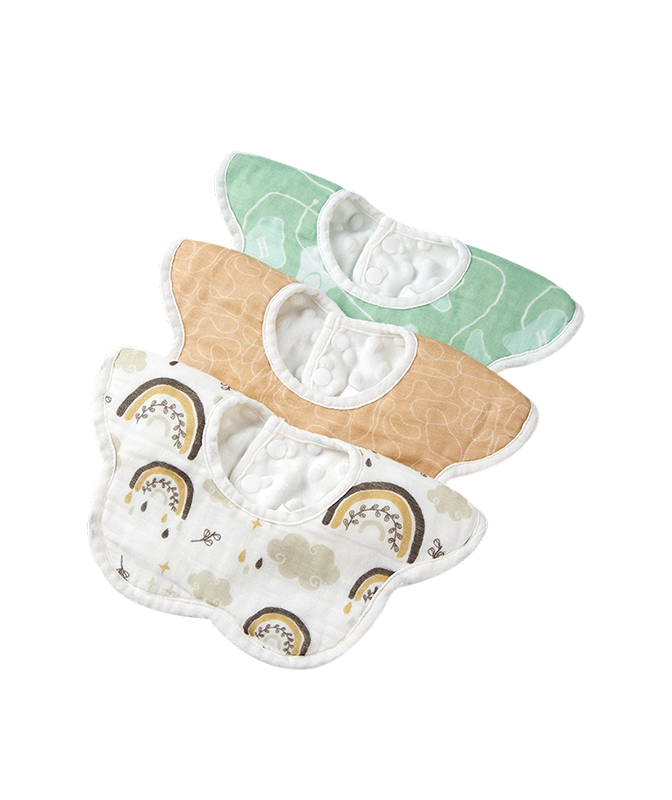
Multiple muslin layers are sometimes used to increase absorption capacity without significantly increasing thickness.
Durability and Washing Compatibility
Muslin cotton is compatible with frequent washing, which is necessary for infant hygiene products. With repeated washing cycles:
- Fabric tends to soften rather than stiffen
- Structural integrity remains stable if properly stitched
- Shrinkage can occur if not pre-washed during manufacturing
Caregivers often choose muslin cotton bibs because they tolerate repeated cleaning without losing usability.
How Does Muslin Bandana Bib Improve Coverage?
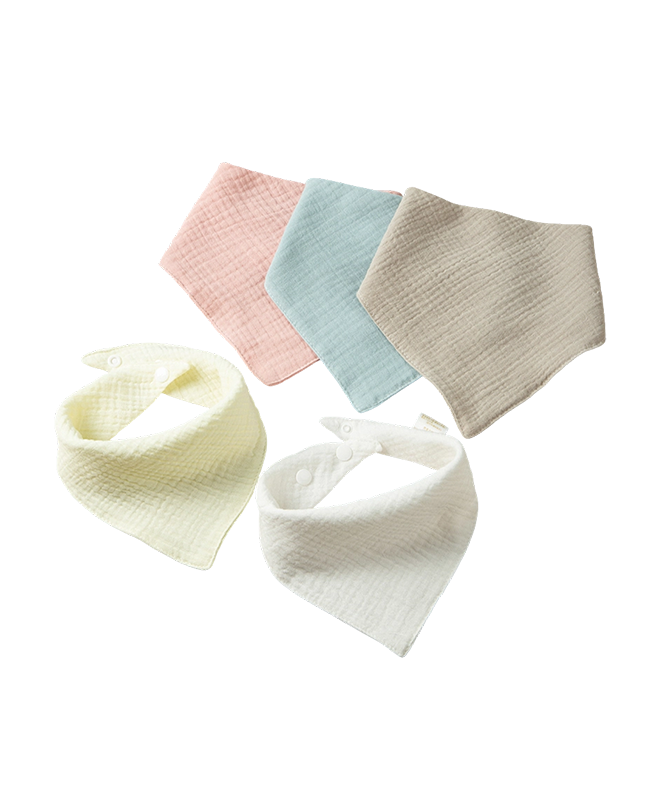
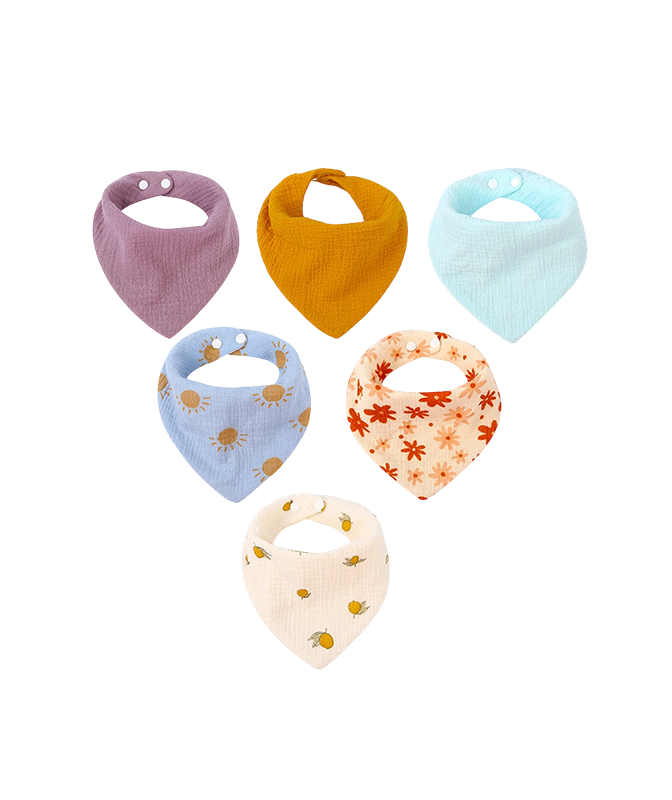
The muslin bandana bib differs primarily in shape and ergonomic design. It typically features a triangular form inspired by bandana scarves.
Shape and Functional Coverage
Unlike traditional rounded bibs, the triangular shape provides focused coverage along the front of the neck and upper chest. This design aligns with the primary drooling area.
Functional benefits include:
- Targeted moisture absorption in high-saliva zones
- Reduced bulk compared to full-coverage feeding bibs
- Better compatibility with daily clothing
This makes the bandana design particularly suitable for drooling stages rather than feeding sessions.
Neck Fit and Stability During Movement
Bandana bibs often use snap closures at the back of the neck, allowing adjustment as the infant grows.
This closure system provides:
- Secure positioning during crawling or movement
- Adjustable sizing for extended usability
- Reduced friction compared with rigid closures
Stable positioning helps ensure consistent moisture protection.
Use as Both Functional and Daily Wear Item
In addition to moisture management, bandana bibs can function as part of everyday infant clothing. Because of their scarf-like shape, they blend more naturally with outfits.
This allows continuous wear throughout the day without interfering with comfort or mobility.
When Should Caregivers Choose Each Bib Type?
Understanding when to use each bib type improves efficiency and comfort.
Use standard baby bibs when:
Feeding with milk, formula, or solid foods
Easy cleaning is a priority
Use muslin cotton bibs when:
- Baby has frequent drooling
- Breathability is important in warm environments
- Softness and comfort are key concerns
Use muslin bandana bibs when:
- Drooling is moderate to heavy
- Caregivers prefer lightweight protection
- Infant is active and moving frequently
Selecting bib types based on specific daily situations improves effectiveness.
How Do Materials Affect Infant Skin Health?
Material selection plays a direct role in skin safety and comfort.
Natural Fiber Advantages
Cotton fibers are generally compatible with sensitive skin due to:
- Breathability
- Reduced heat retention
- Lower friction compared with synthetic materials
These factors reduce the likelihood of irritation.
Moisture Retention and Evaporation Balance
Effective bib materials balance two properties:
- Absorption to remove moisture from skin
- Evaporation to prevent long-term dampness
Muslin cotton performs well in this balance because of its open weave structure.


 English
 Español
 Deutsch
 عربى
عربى