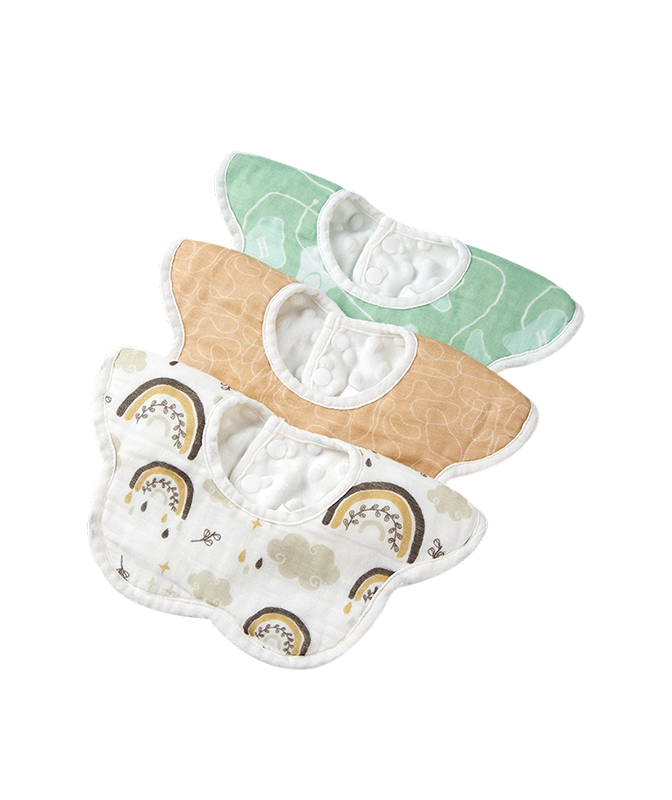
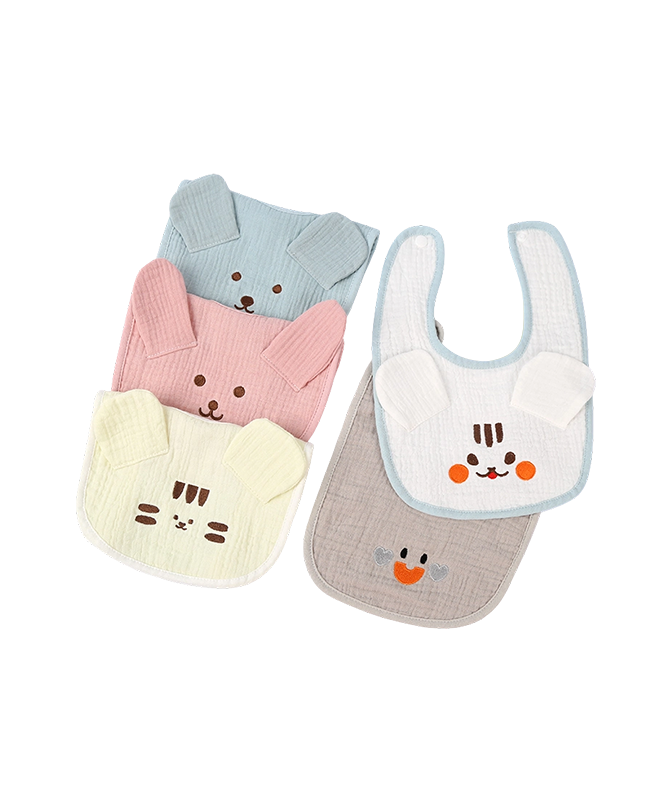
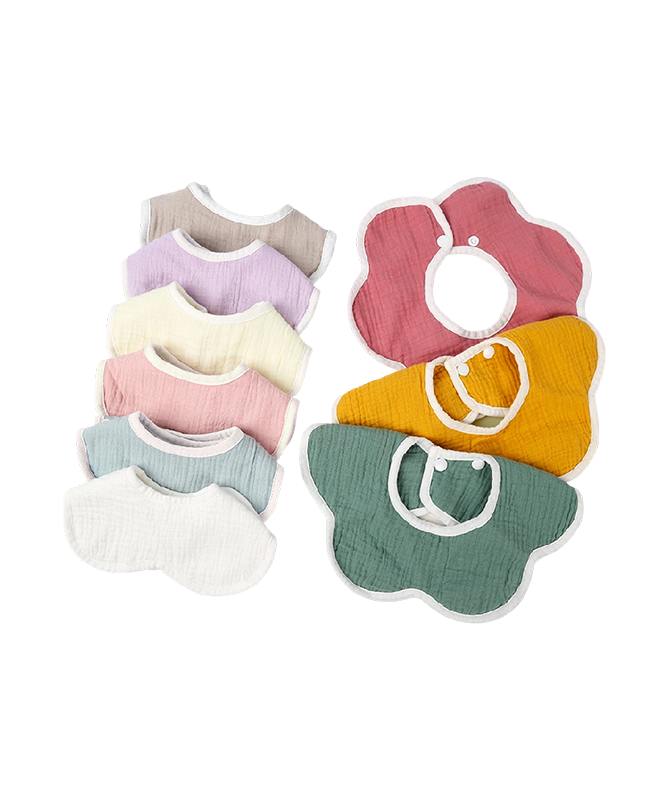
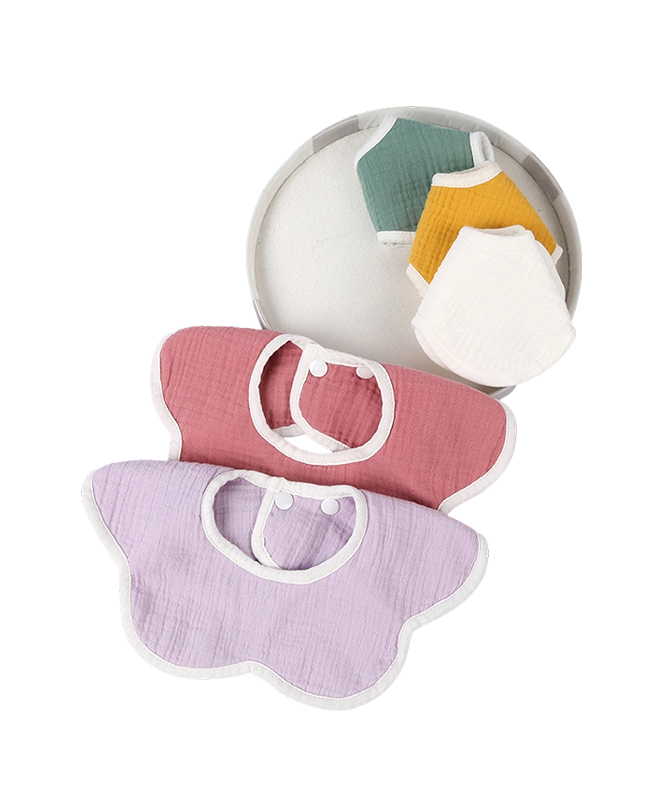
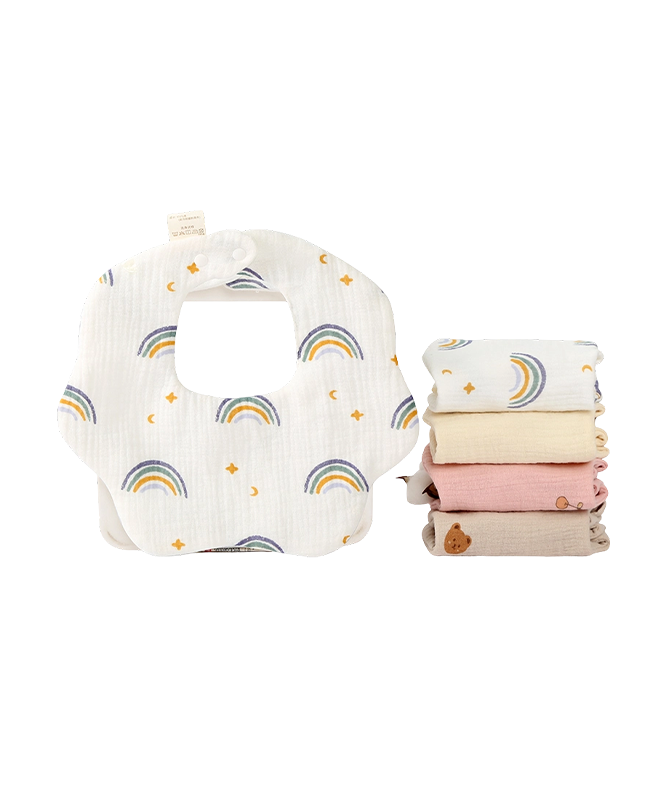
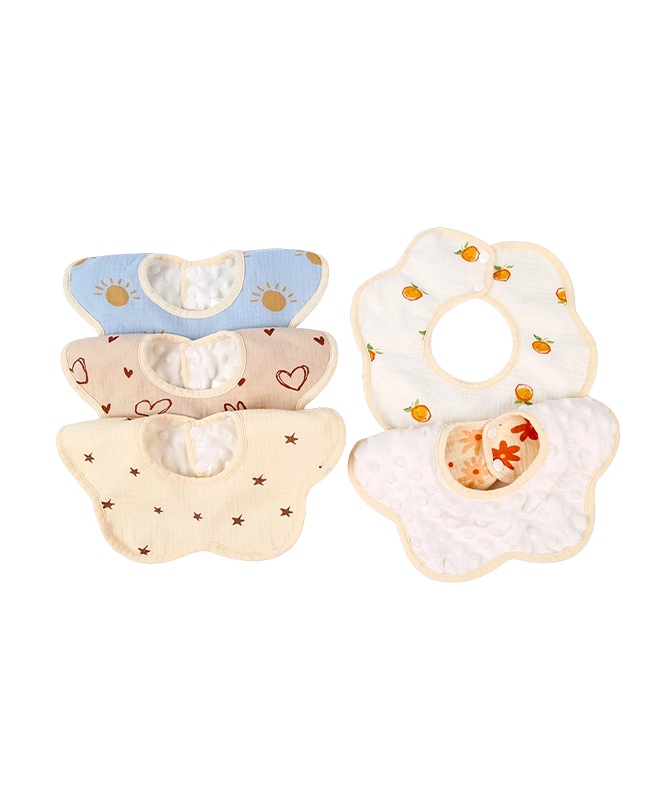
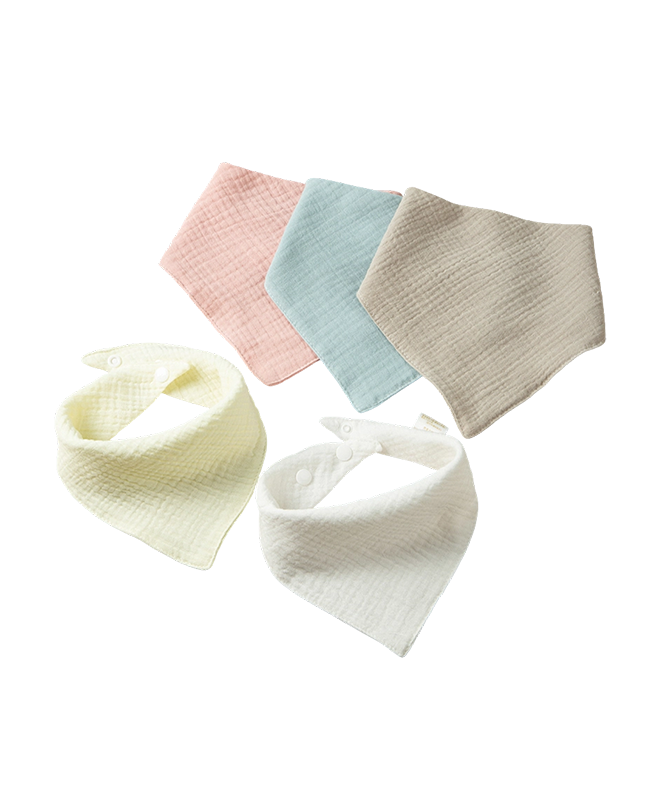
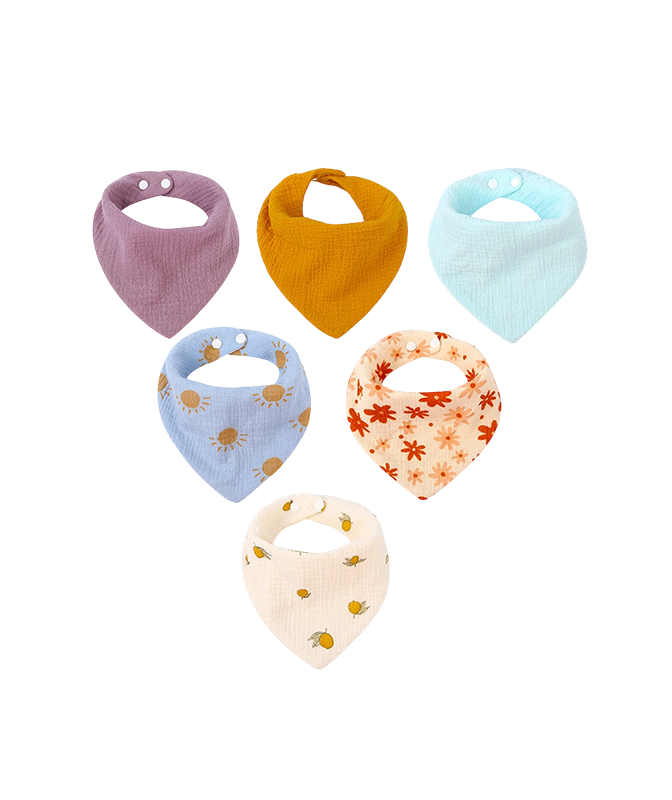
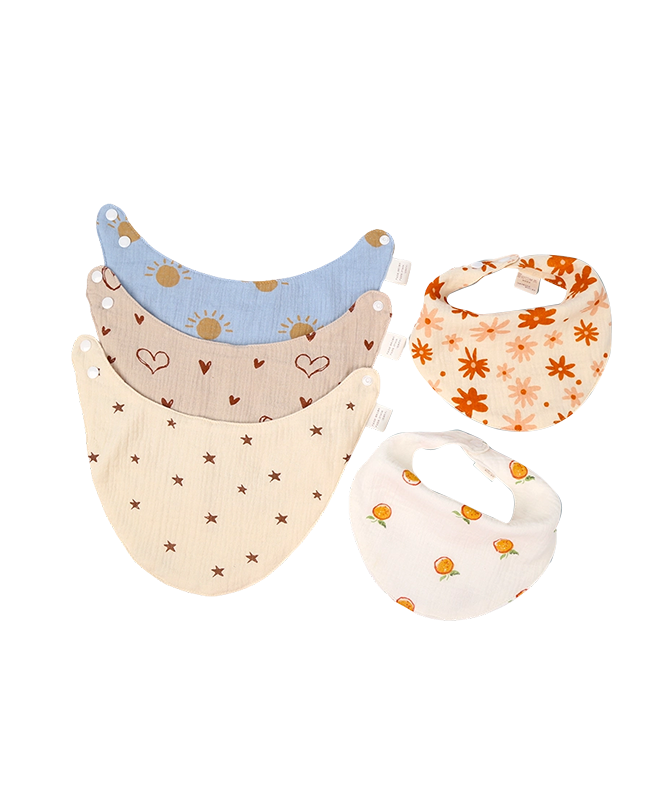
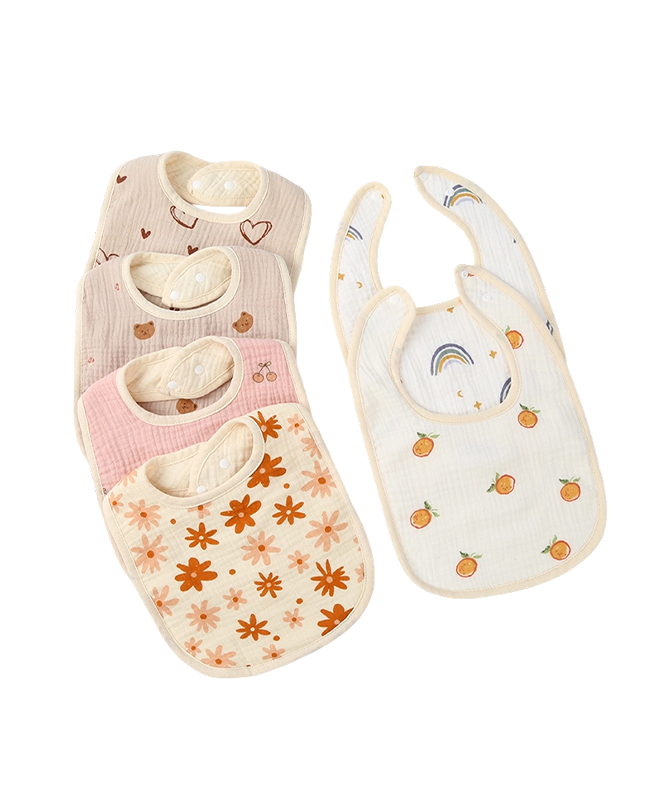
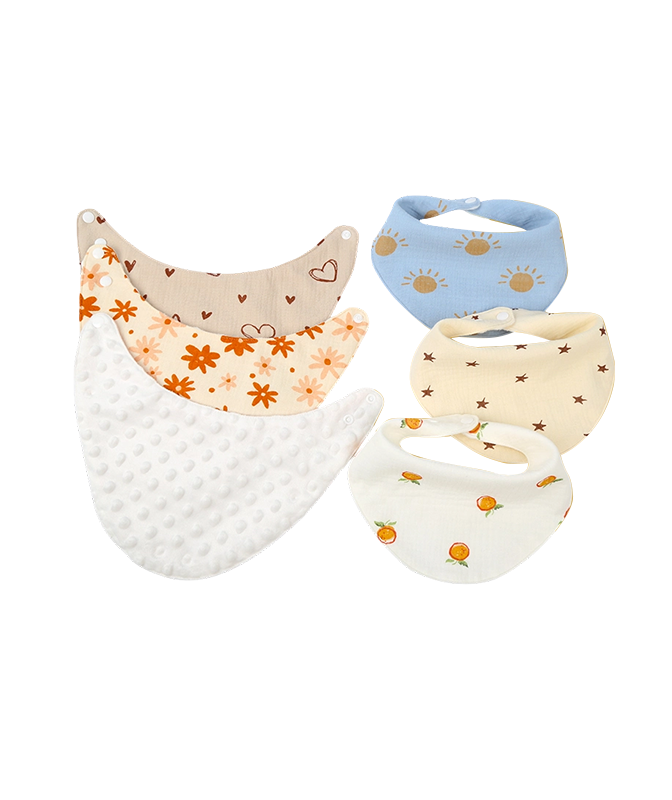
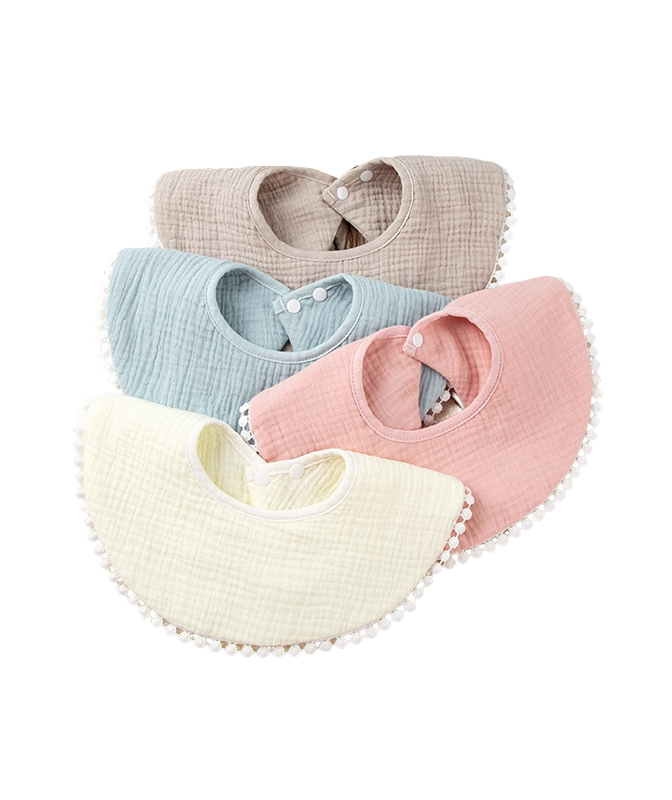
Why Are Muslin Baby Bibs Popular Today?
Muslin Baby Bibs are made from loosely woven cotton fabric known for its softness and breathability. Muslin has been used in infant textiles for decades due to its gentle texture and flexible structure.
- What Makes Muslin Fabric Breathable?
Muslin uses a plain weave pattern with lower thread density than traditional cotton fabrics. This structure allows air circulation, which helps reduce heat buildup around the baby’s neck and chest.
Key benefits include:
- Improved airflow to reduce skin overheating
- Lightweight feel suitable for extended wear
- Reduced friction on sensitive skin
These characteristics make muslin particularly useful in warm climates or indoor environments with stable temperatures.
- How Does Muslin Improve Comfort During Teething?
Teething increases saliva production, which can leave the neck area damp for extended periods. Muslin bibs help manage this because:
- The fabric absorbs moderate moisture without feeling heavy
- Soft fibers reduce irritation during prolonged skin contact
- Flexible drape allows natural movement without stiffness
Some muslin bibs use multiple layers to increase absorption while maintaining breathability.
- How Durable Are Muslin Bibs After Washing?
Muslin fabric becomes softer after repeated washing, which improves comfort over time. However, durability depends on:
- Stitch reinforcement around edges
- Fabric thickness
- Proper washing temperature
Parents should avoid excessive heat drying, which may cause shrinkage or fiber stress.
Muslin bibs function well for drooling management and everyday wear, especially during early infancy when comfort is a priority.
What Defines Highly Absorbent Bibs Performance?
Absorbent Bibs are specifically designed to manage large amounts of moisture, making them suitable for heavy drooling or feeding stages involving liquids and semi-solid foods.
- What Materials Improve Absorption Efficiency?
Absorbent bibs often combine multiple fabric layers, including:
- Terry cloth cotton
- Fleece backing
- Cotton-polyester blends
These materials trap moisture and prevent liquid from reaching clothing underneath.
Layered construction increases absorption capacity while maintaining manageable weight.
- How Do Multi-layer Bibs Prevent Clothing Wetness?
Absorbent bibs use a layered approach:
- Outer layer absorbs initial moisture
- Middle layer distributes liquid evenly
- Inner layer provides additional retention
This structure reduces moisture transfer to inner garments.
Some designs also include moisture-resistant backing to enhance protection.
- When Are Absorbent Bibs Useful?
Absorbent bibs provide practical value during:
- Teething stages with frequent drooling
- Bottle feeding with occasional spills
- Early solid feeding when coordination is limited
Babies experiencing reflux or frequent spit-up may also benefit from higher absorption capacity.
- How Should Parents Maintain Absorbent Bibs?
Frequent washing is necessary to maintain hygiene. Care guidelines include:
- Machine washing with mild detergent
- Avoiding fabric softeners that reduce absorbency
- Ensuring complete drying to prevent odor buildup
Proper maintenance preserves fabric performance and extends product lifespan.
Absorbent bibs help reduce the need for full clothing changes, which simplifies daily care routines.
Why Do Colorful Bibs Offer Practical Benefits?
Colorful Bibs provide both functional and psychological advantages. While appearance may seem secondary to performance, color selection influences stain visibility, visual stimulation, and coordination with infant clothing.
- How Do Colors Help Hide Feeding Stains?
Feeding introduces substances such as milk, fruit puree, and vegetables, which can leave visible stains. Darker or patterned bibs help reduce stain visibility compared to plain white fabrics.
Patterned surfaces distribute visual attention across multiple colors, making stains less noticeable between washes.
- How Do Visual Elements Support Infant Development?
Infants respond strongly to visual contrast and color variation. Bright or patterned bibs can:
- Attract infant attention during feeding
- Provide visual stimulation
- Encourage focus during self-feeding stages
While bibs are not developmental tools, visual engagement contributes to sensory exposure.
- How Do Colored Fabrics Maintain Appearance After Washing?
Color retention depends on dye quality and fabric processing. Parents should look for:
- Colorfast dyes
- Proper stitching to prevent fading concentration at seams
- Washing instructions that protect dye integrity
Cold or warm water washing helps preserve color consistency.
- When Are Colorful Bibs Practical?
Colorful bibs are useful in situations such as:
- Daycare environments where identification is helpful
- Public outings where appearance matters
- Frequent feeding schedules with higher stain exposure
Visual variety also helps parents organize bib rotation systems.
Colorful bibs combine functionality and appearance while maintaining essential moisture control features.


 English
 Español
 Deutsch
 عربى
عربى