English
 Español
 Deutsch
 عربى
عربى
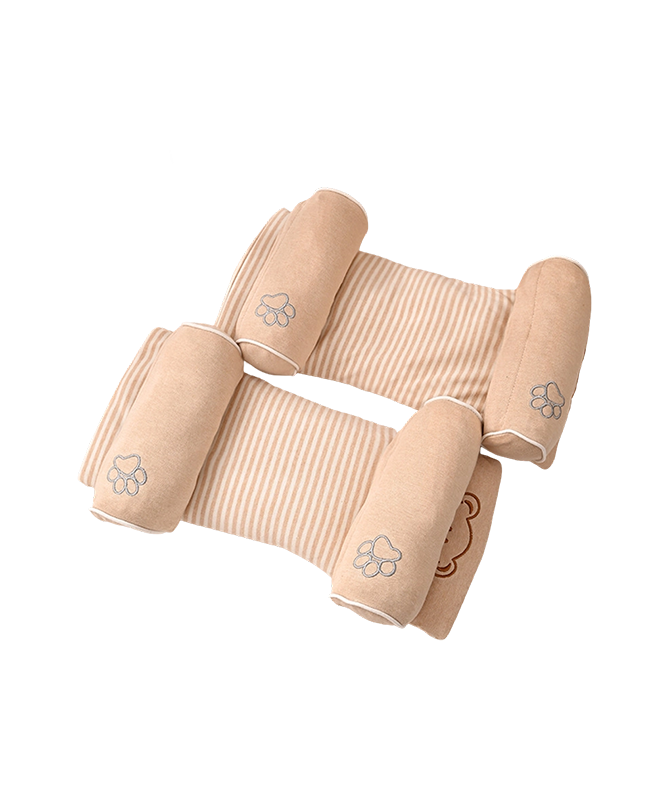
Walk down the baby aisle at any store, and you will see them. Tiny pillows, often decorated with animals or stars, sized for cribs and strollers. A baby pillow looks like a miniature version of an adult pillow. But it serves a different purpose. Adults use pillows for neck support and spinal alignment. Babies have different needs. The right baby pillow provides a comfortable surface for supervised rest, tummy time, or bottle feeding. The wrong one can be unsafe.
Age Matters More Than You Think
Here is the important thing about baby pillow use. Age matters. Pediatricians generally advise against pillows in cribs for infants under 12 months. The risk of suffocation is real. A newborn cannot lift its head or turn away from a soft surface. A baby pillow in a crib with a young infant creates unnecessary danger.
For older babies and toddlers, the conversation changes. A baby pillow designed for a 12-month-old is different from one for a 3-year-old. The thickness, firmness, and size all change as the child grows.
Here are general age guidelines for baby pillow use:
- Under 12 months — no pillow in the crib, period
- 12 to 24 months — thin, firm pillows with breathable covers
- 2 to 4 years — slightly thicker but still firm, small enough to fit toddler beds
- 4 years and up — transition to standard youth pillows
Always check with a pediatrician before introducing a baby pillow. Every child develops differently. Some are ready earlier. Some need to wait longer.
What Makes a Safe Baby Pillow
Not every pillow sold as a baby pillow is actually safe for a baby. The market is full of cute products that do not meet basic safety standards.
Firmness is the first thing to check. A safe baby pillow does not compress easily. Push your hand into the pillow. If it sinks in more than an inch, it is too soft for a young child. Soft pillows conform to the baby's face. That is exactly what you do not want. A firm pillow keeps its shape and leaves space around the baby's nose and mouth.
Size matters too. A baby pillow should be small. Too large, and the baby could roll off the pillow and end up face-down on the mattress. safe designs measure about 12 by 16 inches or smaller. Just big enough to support the head. Not big enough to cover the baby's whole face.
Breathability is another feature. Some baby pillow products use mesh or perforated materials. Air passes through even if the baby's face is against the pillow. Not a substitute for firmness and proper supervision, but an added layer of safety.
The cover should be removable and washable. Babies drool. Babies spit up. A baby pillow that cannot be washed becomes a breeding ground for bacteria and mold. Look for machine-washable covers with sturdy zippers or velcro closures.
Filling Materials Compared
What is inside a baby pillow matters. Different fillings have different properties.
Polyester fiberfill is the common. It is cheap, lightweight, and machine-washable. But quality varies. Cheap polyester clumps together after washing. It compresses easily. A good baby pillow uses high-loft polyester that bounces back.
Memory foam is firmer. A baby pillow made from memory foam holds its shape well. But memory foam can be too warm. Babies overheat more easily than adults. Some memory foam pillows include gel layers or cooling covers to address this.
Natural fills like cotton or wool are less common. A baby pillow with cotton fill is soft but compresses too easily for young toddlers. Wool regulates temperature well but costs more. Some parents prefer natural materials over synthetics for chemical sensitivity reasons.
Here is a quick comparison of baby pillow filling types:
- Polyester fiberfill — affordable, washable, but quality varies widely
- Memory foam — firm and supportive, but can trap heat
- Cotton — soft and natural, but compresses too much for safety
- Wool — temperature-regulating and moisture-wicking, but expensive
- When and How to Use a Baby Pillow
Even with a safe baby pillow, supervision is required. A pillow is not a sleep solution for a newborn. It is a tool for specific situations.
Tummy time is one use. Place a thin baby pillow under the baby's chest and arms. The slight elevation helps the baby lift its head and build neck muscles. Never leave a baby unattended during tummy time.
Bottle feeding is another use. A baby pillow propped under the bottle and the baby's head keeps the feeding angle consistent. This reduces the chance of ear infections from milk flowing into the eustachian tubes. Again, do not leave the baby alone with the bottle.
For toddlers transitioning to a pillow, start with a thin baby pillow under the fitted sheet. This keeps the pillow from shifting during the night. If the toddler sleeps well for a few weeks with no issues, move the pillow on top of the sheet.
Small Comfort, Big Responsibility
A baby pillow is a small product. But the safety considerations are not small. Too soft, and the baby suffocates. Too thick, and the neck bends at an unhealthy angle. Too large, and the baby rolls into a dangerous position. Parents who choose a baby pillow need to research, check safety standards, and supervise use. Done right, a good baby pillow adds comfort to supervised rest, tummy time, and feeding. Done wrong, it adds risk.