English
 Español
 Deutsch
 عربى
عربى
A U-shaped waterproof bib lives in a brutal environment. Puréed food. Drool. Milk. Gets thrown in the washing machine. Gets twisted dry. Gets pulled by small, determined hands. Many bibs sold for this purpose are designed to look good in a flat-lay photo. A U-shaped waterproof bib factory that actually tests its products for repeated washing and real liquid pressure is more uncommon than it should be.
The U-Shape Is Functional, Not Decorative
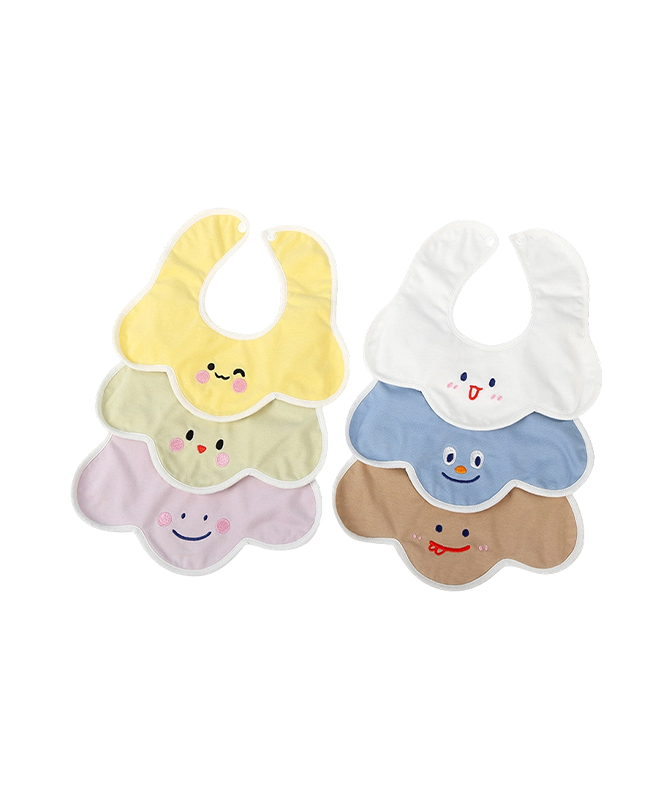
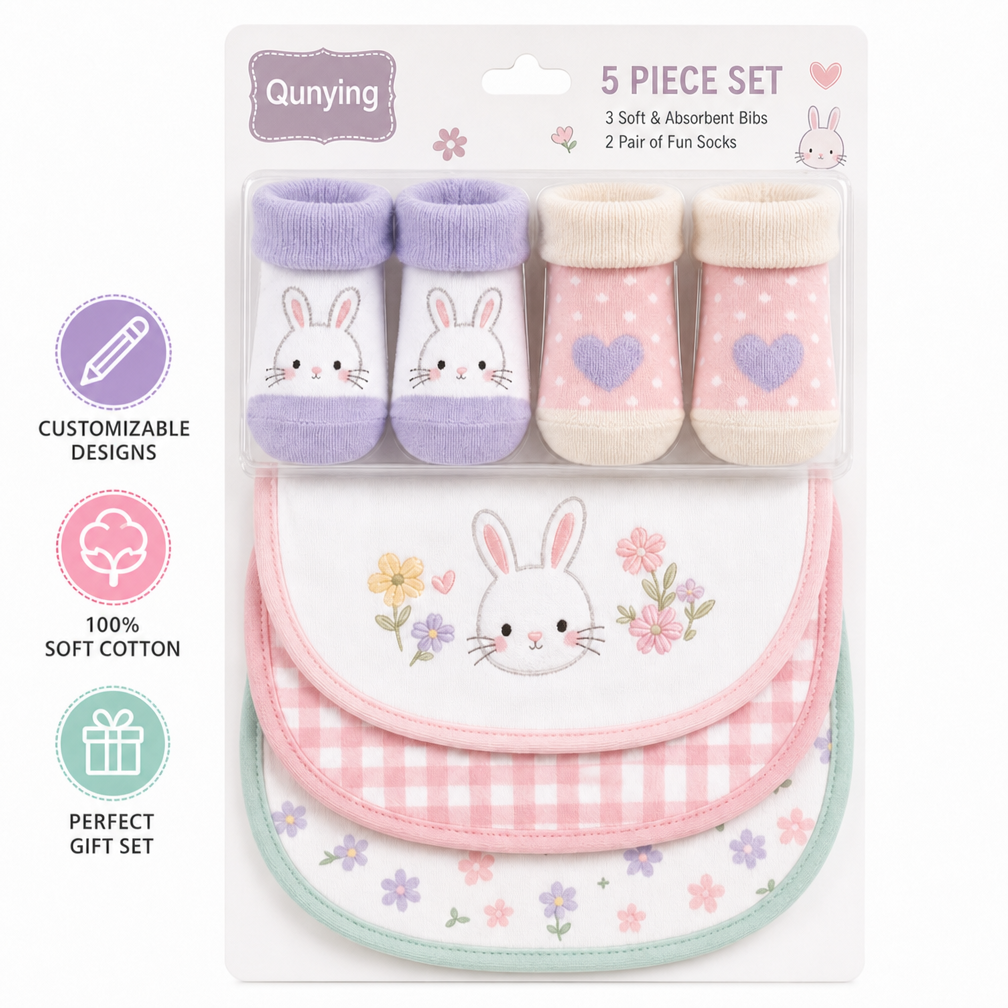
A straight-across bib neckline gaps at the sides. Food drips down the collarbone. A U-shaped waterproof bib curves around the neck, following the collar line. The fit closes the gap. Sounds obvious, but the depth and width of that U varies a lot between factories.
Too shallow, and the bib still gaps. Too deep, and the shoulder coverage shrinks. The outstanding ones I've measured have a U that drops about five to seven centimetres from the collar apex, with a gentle curve rather than a sharp V. A sharp V folds over on itself when the baby leans forward. A soft U stays flat.
The closure at the back of the neck is usually hook-and-loop or a snap. Hook-and-loop is easier to adjust. It also collects lint in the wash and stops gripping after a few months. Snaps are more durable but offer fewer size adjustments. A U-shaped waterproof bib factory that uses a combination—a snap for primary closure and a small hook-and-loop tab for fine adjustment—has actually watched someone put a bib on a squirming child. Which brings me to the next point.
The Waterproof Layer Isn't What Many People Think
A truly waterproof bib has a barrier layer. Not a coating. A coating is applied to the back of the fabric and sits on the surface. It works until you wash it. A barrier membrane is a separate film laminated between the outer fabric and the inner lining. The outstanding U-shaped waterproof bib I tested had a polyurethane membrane bonded to a cotton outer and a soft polyester lining. Water couldn't get through. Drool couldn't soak through. The membrane stayed intact after twenty washes.
Spray-coated bibs are cheaper to produce. A U-shaped waterproof bib factory can churn them out with basic equipment. The coating goes on as a liquid and cures. It looks fine at first. The problem is mechanical. When you wash and crumple the bib, the coating micro-cracks along the fold lines. Water finds those cracks. The baby's shirt gets wet. The parent blames themselves for not changing the bib fast enough when they should be blaming the coating that failed after wash number five.
Ask the factory what the waterproof layer is. If they say "waterproof coating" and can't name the polymer or the lamination process, assume it's a spray-on. If they say "PU membrane, thermally laminated," you're talking to a factory that understands the difference.
The Pocket Test Nobody Does
Many U-shaped waterproof bibs come with a catch pocket at the bottom. The pocket is supposed to stay open to catch dropped food. Many don't. The fabric is too soft, and the pocket collapses flat against the bib. Food slides right over it.
A pocket that stays open needs some structure. A stiffened edge, a small internal boning strip, or simply a heavier-weight fabric that holds its shape. A U-shaped waterproof bib factory that adds a small plastic stiffener inside the pocket hem understands the problem. One that cuts the pocket from the same soft fabric as the body and calls it done hasn't tested the bib on an actual infant.
The pocket also needs to be waterproof on the inside. A soaked pocket that sits against the baby's stomach is worse than no pocket at all. Check that the same waterproof membrane runs through the pocket construction.
Washability Is the Real Durability Test
A bib gets washed. A lot. Sometimes daily. A U-shaped waterproof bib factory can make a bib that looks waterproof on day one and fails by day thirty because the materials can't handle hot water, detergent, and the dryer.
The care label should tell you something. If it says "wipe clean only," the factory knows the waterproofing won't survive a machine wash. That might be fine for a travel bib used occasionally. It's not fine for a daily feeding bib that goes through the wash every night. Parents will machine-wash it regardless of what the label says. The bib needs to survive that.
I've run samples through twenty wash-and-dry cycles. The bibs that came out still waterproof had taped seams and a laminated membrane. The ones that leaked had spray coatings and stitched necklines. The difference was clear by wash ten. By wash twenty, the coated bibs were just fabric with a few patches of cracked plastic on the back.
What to Ask a U-Shaped Waterproof Bib Factory
- What is the waterproof barrier? Coating, membrane, or lamination?
- How is the neck edge finished? Stitched, welded, or taped?
- Does the catch pocket stay open? Is it stiffened?
- How many machine wash cycles is the waterproofing rated for?
- Can the bib be tumble-dried, and at what temperature?
- Is the hook-and-loop closure rated for repeated washing without losing grip?
Order samples from three factories. Wash them all twenty times. Do the water puddle test at the neck seam after every fifth wash. Feed a real baby with them for a week. The bib that keeps the onesie dry after all of that is the one to stock. The rest are photo props.